News & Infomation
简报

July 2013
 July 2013
- LONGCHAMP won a case against SISLEY in an appellate court. The appellate court ordered SISLEY not to manufacture and sell imitation bags.
- ANNOUNCEMENT OF NEW ATTORNEY AT LAW
LONGCHAMP won a case against SISLEY in an appellate court. The appellate court ordered SISLEY not to manufacture and sell imitation bags.
LONGCHAMP | SISLEY |
|
|
|
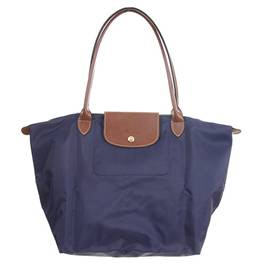
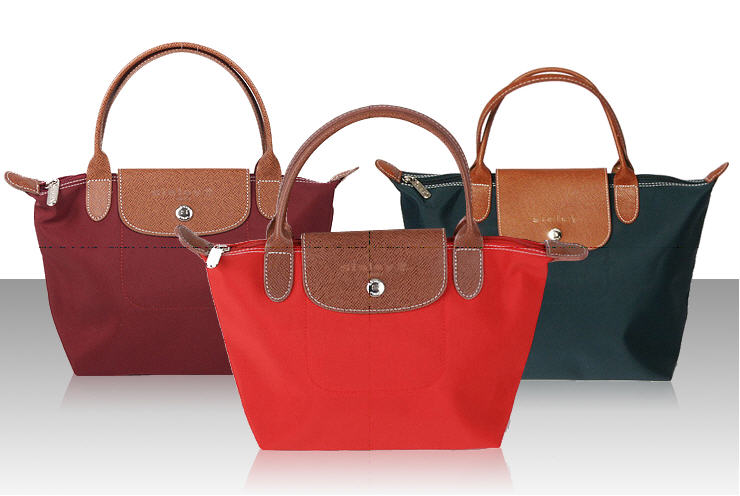
1. History of the case
In 2012, a French company, LONGCHAMP (plaintiff), filed a lawsuit against a Korean company, AI International, Co., Ltd. (defendant, brand owner of SISLEY) in the Seoul Central District Court seeking an injunction against manufacturing, selling, and displaying imitation Longchamp 'Le Pliage' bags. However, the Seoul Central District Court ruled against the plaintiff on the grounds that a design similar to Longchamp goods had once been registered, and many of products that are of similar style can be found in the market, and thus its design lacks distinctiveness. LONGCHAMP appealed to the Seoul High Court, and the Court rendered its decision on June 13, 2013 reversing the District Court’s decision.
2. Issue
Under the Korean Unfair Competition Prevention Act, it is prohibited to cause confusion with another person's goods by using a design identical or similar to another person's design widely known in Korea as an indication of source of goods or by selling goods with such design thereby causing confusion as to the source of goods to general consumers under Articles 2.1.a and 4 of the Korean Unfair Competition Prevention Act (hereinafter "KUCPA".) In the instant case, the question was whether the defendant has committed such anti-competitive conduct. Therefore, the issues came down to 1) whether defendant's goods are confusingly similar to the plaintiff's goods, and 2) whether the design of the plaintiff's goods has functioned as an indicator of origin and has become well known (in other words, whether the plaintiff's goods have distinctive character).
3. Holding
A. Whether the design of plaintiff's goods has functioned as an indicator of origin and has become well-known.
The Appellate court held that when the design of the goods has functioned as an indicator of origin for such goods and has become well known, it falls under Article 2.1.a of KUCPA. The Court further held that the plaintiff's goods 1) have a unique character in design and 2) have been sold in the domestic market for a long time since 1997 up to now after its launching, 3) the total sales of the plaintiff's goods from 2007 to 2010 amount to KRW 97Billion (approximately US$90Million), and most of the sales came from the goods of the same design at issue, and 4) according to the consumer survey carried out by Gallup Korea, the majority of the survey respondents recognized the design of the plaintiff's goods as originated from the plaintiff's. The Court accordingly acknowledged that the design of plaintiff's goods has functioned as an indicator of origin and also has become well known.
B. Defendant's counter-argument and Court's judgment thereon
Defendant protested that the design of plaintiff's goods cannot be deemed as having functioned as an indicator of origin and having become well known asserting the following reasons: 1) an application for a utility model registration of goods similar to plaintiff's goods has already been filed but was rejected in Korea; 2) the design with the same shape was registered; 3) products that are of similar style have already been widespread in the market, and hence the shape of the goods at hand cannot have been exclusively used by the plaintiff only.
However, the Seoul High Court held that: 1) despite the fact that the design is based on a general idea, it is possible for a design to obtain a distinctive character when a certain business entity uses such a specific design for its products for a long time regardless of the fact that an application for the utility model registration has once been rejected on the grounds that the subject of such an application was a mere general idea; 2) 7 years had passed since the plaintiff's goods entered the domestic market when the design with the same shape was registered. Thus, the possibility that the registered design copied plaintiff's design cannot be ruled out. Furthermore the said registered design lapsed in 2009, and there is no evidence that any products were manufactured and sold using the registered design and 3) the products with similar shape in the market are called as "Longchamp style," which suggests that the design at issue has been exclusively used by the plaintiff.
C. Whether defendant's goods are confusingly similar to the plaintiff's goods
The Court held that the defendant committed an anti-competitive conduct under Article 2 of KUCPA, by "causing confusion with another person's goods by using identical or similar to another person's design widely known in Korea as an indicator of goods." The reasoning behind this holding was as follows: 1) the goods of defendant are very similar in shape to those of the plaintiff while distinctive parts such as a stamped trademark and a snap button are not easily recognizable; 2) the design of plaintiff's goods has become well known and 3) it seems that defendant intended to free ride on the reputation of plaintiff's goods. The Court also held that even if consumers who purchased defendant's goods were not confused as to the origin of the goods at the time of the purchase, there are other people who may possibly be confused by it, and this also falls under "causing confusion with another person's goods" of Article 2 of KUCPA.
4. Implications of the above Court's ruling
A. The first instance court decision was reversed by the above Seoul High Court decision. The Seoul High Court found that the plaintiff's design has obtained a distinctive character because of the fact that the plaintiff has used such a unique design for a long time, whereas the Seoul Central District Court had held otherwise.
B. The Seoul High Court considered the survey results carried out by Gallup Korea when contemplating on the issue of function of indicator of origin and well-knownness. It is anticipated, consequently, that in similar litigations, more frequent submission of public opinion research results will be used in court.
ANNOUNCEMENT OF NEW ATTORNEY AT LAW

We are pleased to announce that Mr. Biryong Lee joined HANYANG International Patent and Law Firm as of July 8, 2013.
Mr. Lee graduated from Seoul National University, College of Law, and received J.D. degree from Hanyang University, School of Law.
He works primarily in prosecution, litigation, and consulting for trademarks, industrial designs, copyrights and unfair competition laws.
Mr. Lee is fluent in English and Korean languages.
| ▲ Prev | June 2013 - The Korean Customs Office Protects Patent and Design Rights |
|---|---|
| ▼ Next | January 2014 - A Policy of Korea Patent Examination of 2014 |