News & Infomation
简报

April 2014
 April 2014
- Simple and common mark can be claimed as a dominant part if it is recognized remarkably among consumers whose goods it indicates as a result of using the mark after registration. (Korean Supreme Court en banc decision on March 20, 2014, Case No. 2011 HU 3698)
- Revision to the Korean Design Protection Act
Simple and common mark can be claimed as a dominant part if it is recognized remarkably among consumers whose goods it indicates as a result of using the mark after registration. (Korean Supreme Court en banc decision on March 20, 2014, Case No. 2011 HU 3698)
1. History of the case
| Plaintiff (NEW BALANCE ATHLETIC SHOE, INC.)’s Trademark (TM Reg. No. 0105186) | Defendant (Unistar Co., Ltd)’s Used Mark |
|
|
|
| Designated Goods: Umbrellas, Canes, Hand-held flat fans, Athletic footwear | Used Goods : Athletic footwear |
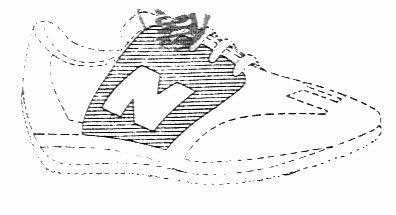

Unistar Co., Ltd (hereinafter, ‘Unistar’) requested a trial to the KIPT (‘Korean Intellectual Property Tribunal’) to confirm the scope of the Plaintiff’s Trademark on March 15, 2011, arguing that Unistar’s used mark is dissimilar to the Plaintiff’s Trademark, and thus, it is out of the extent of Plaintiff’s Trademark right.
KIPT rendered a ruling to the effect that “’N’ of Plaintiff’s Trademark is lack of distinctiveness, and thus, both marks are dissimilar as a whole even though they have partially similar part”.
NEW BALANCE ATHLETIC SHOE, INC. (hereinafter, ‘NEW BALANCE’) appealed against the KIPT’s decision before the Korean Patent Court on August 25, 2011. The Korean Patent court rejected an appeal on November 4, 2011, affirming that Plaintiff’s Trademark and Unistar’s used mark are dissimilar.
NEW BALANCE filed for an appeal with the Korean Supreme Court on November 22, 2011. The Supreme Court decided en banc to reverse the Patent Court’s decision affirming that Plaintiff’s Trademark and Unistar’s used mark are similar and remanded the case back to the Patent Court on March 20, 2014.
At the time of registration, ‘

Plaintiff has used for ’
In addition, ‘
3. Implications of the subject ruling
This decision is meaningful regarding as following point.
Simple and common mark can be claimed as a dominant part if it is recognized remarkably among consumers whose goods it indicates as a result of using the mark after registration even though it was lack of distinctiveness at the time of registration.
Korean Supreme Court changes traditional judgment (Korean Supreme Court decision on December 13, 2007, Case No. 2005 HU 278) which was run counter to Supreme Court’s decision.
Revision to the Korean Design Protection Act
The Korean Design Protection Act was amended, which makes the most substantial changes to the Act in twenty-two years since the entire amendment in 1990. The amendments were promulgated on May 28, 2013 and will become effective on July 1, 2014. Some key provisions of the Revision are as follows.
1. Enlarged concept of the first-to-file system
Under the present Design Protection Act, a design cannot be registered in case that the design is identical or similar to a part of a design that was filed before but not published (“Enlarged concept of the first-to-file system”). Under the revised Design Protection Act, this provision is not applicable when the applicants of both of the applications are the same person.
2. Extension of term of a Design Right
Currently, the term of a design right is fifteen (15) years from the registration date. The revised Act has extended the term, and the term of a design right begins on the date of registration and continues until the date that is twenty (20) years from the application date.
3. Claiming Exception to Public Disclosure
When a disclosure of a design is made by a person who is entitled to a design registration, it is deemed not to lose novelty if the person files an application within six (6) months from the disclosure. Under the current Act, to obtain such benefit, the applicant must specify the purport of such intention to claim an Exception of Loss of Novelty, on an application at the same time as filing the application. Under the revised Act, however, an applicant can claim an Exception of Loss of Novelty even after filing the application; the Exception may be claimed when filing an application, when filing a response to an office action, when filing a response to an opposition, or when filing a response to an invalidation trial.
4. Improvement to the Multiple Application System
Currently, a multiple design application system is available only for designs that are subject to a non-substantial examination system (“Non-Substantial Examination System” applies to designs which should rapidly reflect trend, and these designs are rapidly registered after passing through the basic formalities), and a multiple design application can involve up to twenty (20) designs. Under the revised Act, not only designs that are subject to non-substantial examination but also designs that are subject to substantial examination can be filed as a multiple design application, and the number of designs that can be involved in one multiple design application has been increased from twenty (20) to hundred (100).
5. Joining an international design registration system
Recently, Korean Intellectual Property Office has joined the Hague System for International design registration. Therefore, international applications for designs can be filed through a single application pursuant to the Hague Agreement.
| ▲ Prev | January 2014 - A Policy of Korea Patent Examination of 2014 |
|---|---|
| ▼ Next | June 2014 - Amendments to Korean Patent Act, Utility Model Act and Trademark Act |